Issue #1: March 2026
Welcome to the first edition of the VCCU Wealth Management Newsletter

Welcome to the first edition of the VCCU Wealth Management Newsletter
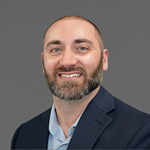
As a valued VCCU Wealth Management client, we are pleased to introduce our newest Wealth Management Advisor, Owen Galipeau, through LPL Financial Services (LPL).
Owen brings over 10 years of experience in the financial industry with a passion for helping clients plan for what matters most to them. He provides personalized guidance for every stage of life, from preparing for retirement to navigating major financial changes. Working closely with you, Owen tailors your investment approach based on your risk level, timeline, and financial needs, helping you move forward with clarity and understanding.
Owen joins Gina O'Callaghan in serving members in the Thousand Oaks, Camarillo, Moorpark, and Simi Valley communities. As a Simi Valley resident, Owen enjoys visiting the Thousand Oaks Civic Arts Plaza and the Simi Valley Cultural Arts Center, as well as playing basketball in his spare time.
Whether you are just beginning your financial journey or looking to revisit an existing plan, Owen is committed to working closely with you to create a comprehensive, personalized roadmap for your short‑ and long‑term goals.
If you have any questions, please contact Owen at 805.206.0535 or click here to schedule your no-obligation appointment.

Taking Advantage of a Roth Contribution Option Can Give You Some Flexibility in Retirement According to Vanguard’s “How America Saves 2024,” 82% of employers offer a Roth 401(k) option in addition to a traditional, or regular, 401(k) option. However, just 17% of employees contribute to a Roth. If you have access to a Roth 401(k) option through your employer, it can add some diversity and flexibility to your retirement income and tax strategy. Roth or regular? Here’s what to consider:
Contributions to a Roth 401(k) are made with after-tax dollars, unlike a traditional 401(k) where contributions are made with pre-tax dollars.
This means you pay taxes on the money before it goes into your Roth 401(k), but you don’t pay taxes on the money (including any earnings) when you withdraw it in retirement. With a traditional 401(k), you pay taxes on the money (including any earnings) when you withdraw it in retirement.
Both accounts share the same contribution limit. In 2025, you can contribute up to $23,500 ($31,000 if you’re 50 or older, $34,750 for those age 60-63-if your plan permits). You can contribute to both accounts in the same year, as long as you keep your total contributions under that cap. Please note that starting in 2026, if you make $145,000+ in wages, any catch-up contribution you wish to make must be designated as a Roth catch-up contribution. This mandate is part of the SECURE Act 2.0 provisions.
Withdrawals of any contributions and earnings from a Roth 401(k) are tax-free, which can be beneficial if you expect to be in a higher tax bracket in retirement. However, certain criteria must be met:
With a traditional 401(k), Required Minimum Distributions (RMDs) must begin at age 73. However, starting in 2024, a Roth 401(k) does not require RMDs during the account holder’s lifetime. Each year you have the freedom to withdraw whatever amount you want from your Roth 401(k) and let the rest continue to potentially grow on a tax-deferred basis.
If offered, an employer match is typically available to you whether you save through a Roth 401(k) or traditional 401(k). For details on how your plan handles employer-matching contributions, check with your plan administrator.
No one knows what the tax brackets will be in the future, so you could decide to diversify your contributions evenly between the traditional and Roth option. Depending on your circumstances, you can always decide to contribute more toward one or the other in the future. In any event, a Roth option gives you the flexibility to further customize your plan based on your unique needs.
Informational Sources: Vanguard: “How America Saves Report 2024”; Bankrate.com: “Roth 401(k) vs. 401(k): Which one is better for you?” (January 12, 2024).
LPL Financial and its advisors are only offering educational services and cannot offer participants investment advice specific to their particular needs. If you are seeking investment advice specific to your needs, such advisory services must be obtained on your own separate from this educational material. Kmotion, Inc., 12336 SE Scherrer Street, Happy Valley, OR 97086; www.kmotion.com
Join our live webinar via Zoom. Our guest speaker from Franklin Templeton will be reviewing the latest tax policy update, government spending and debt outlook, and key wealth‑planning opportunities for the year ahead.

We’re here to help! From reviewing your portfolio to assessing your short‑ and long‑term financial goals, our services include:
Schedule your complimentary no-obligation review or contact your advisor today!
Contact Us

Each week LPL's Chief Equity Strategist and a rotating co‑host from LPL Research break down market activity with insights, visuals, and charts that help bring the discussion to life.
Listen & Watch HereSecurities and advisory services are offered through LPL Financial (LPL), a registered investment advisor and broker/dealer (member FINRA/SIPC). Insurance products are offered through LPL or its licensed affiliates. Ventura County Credit Union (VCCU) and Wealth Management at Ventura County Credit Union ARE NOT registered as a broker/dealer or investment advisor. Registered representatives of LPL offer products and services using Wealth Management at Ventura County Credit Union, and may also be employees of VCCU. These products and services are being offered through LPL or its affiliates, which are separate entities from and not affiliates of VCCU or Wealth Management at Ventura County Credit Union. Securities and insurance offered through LPL or its affiliates are:
| Not Insured by NCUA or Any Other Government Agency | Not Credit Union Guaranteed | Not Credit Union Deposits or Obligations | May Lose Value |